R&D
From component teams to Team Topologies to FaST

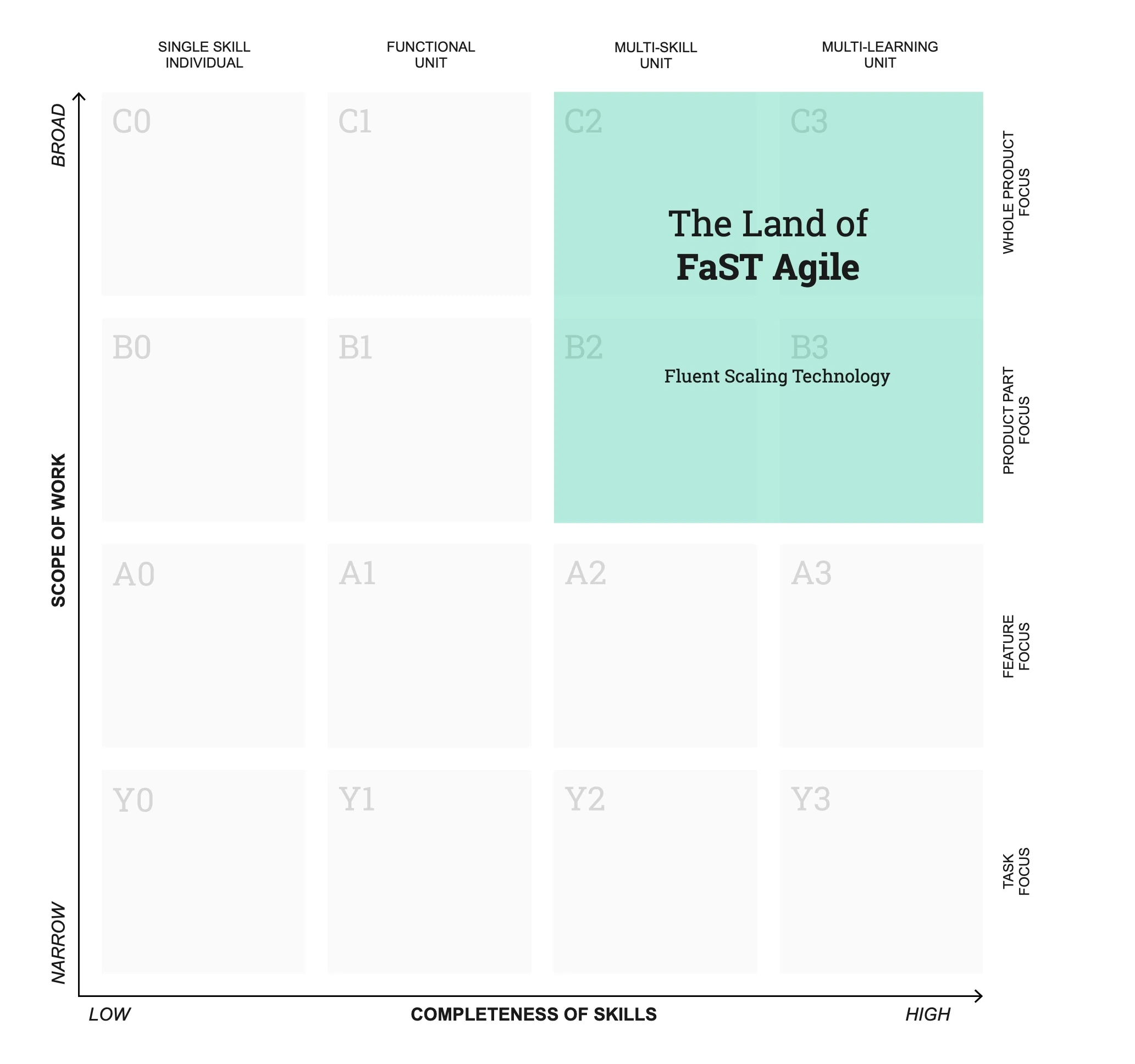
Framework mapping / FAST
FRAMEWORK MAPPING
Fluid Adaptive Scaling Technology (FASTagile), originated by Quinton (Ron) Quartel, is one of the cornerstone bodies of knowledge for designing, creating, and sustaining adaptive ecosystems.
From the book 10X ORG: Large-Scale Scrum (LeSS), Nexus, Fluid Adaptive Scaling Technology (FASTagile) originated by Quinton (Ron) Quartel, and Creating Agile Organizations (CAO) are cornerstone bodies of knowledge for designing, creating, and sustaining adaptive ecosystems. All of them aim to remove fences around silos and optimize for the fluid exchange of ideas, skills, and collaboration: broader mandates to create a bigger brain.
Quinton Quartel wrote about the book: “Drawing on my experience creating FAST Agile and witnessing hundreds of transformations, I can say that The 10X Org offers a real breakthrough. The book’s core insight is clear: true 10X growth requires rethinking organisational structure, not just adding technology to existing silos.” In his view, fluid scaling and self-organisation are the key building blocks for 10X change.
The book’s Elevating Katas include one for FAST: one way to sustain a broader work mandate is to allow teams and individuals within the team of teams to self-select work and the peers with the skills to create value together. To facilitate self-selection at scale, FAST combines outcome-based product management, open space technology, and dynamic re-teaming.
“Throw your work on a wall” is a phrase Quinton Quartel often uses. It is about visually representing business goals and work for the team of teams, a “Collective,” to self-organize around. The book shows what that looks like: product managers throw a ranked list of client needs and stakeholder ideas onto the wall, and people form mixed groups, each picking one or several related items to explore. That broad, shared learning and co-ownership enables organization-wide adaptability: once an idea is refined, any team can carry it forward.
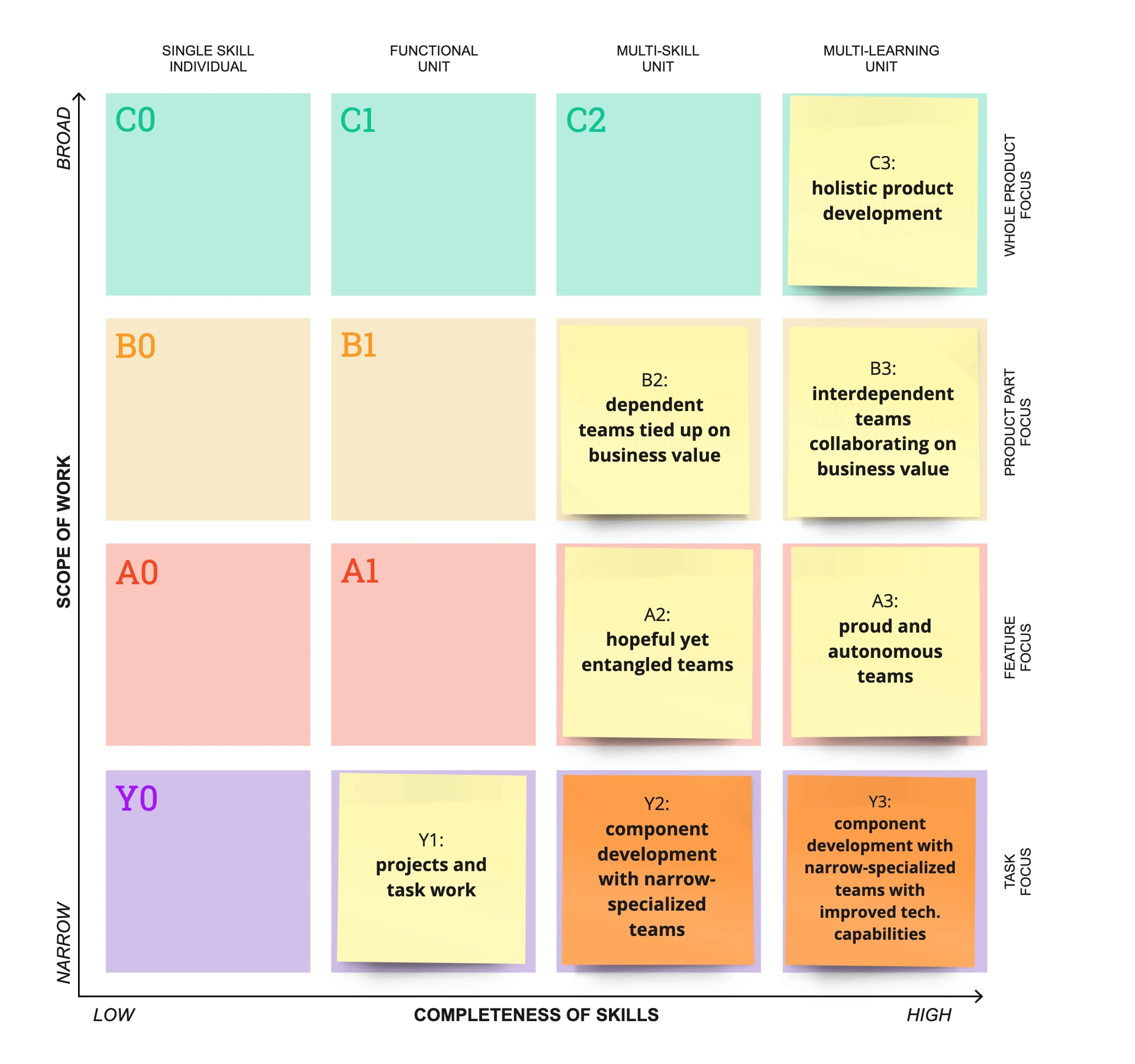
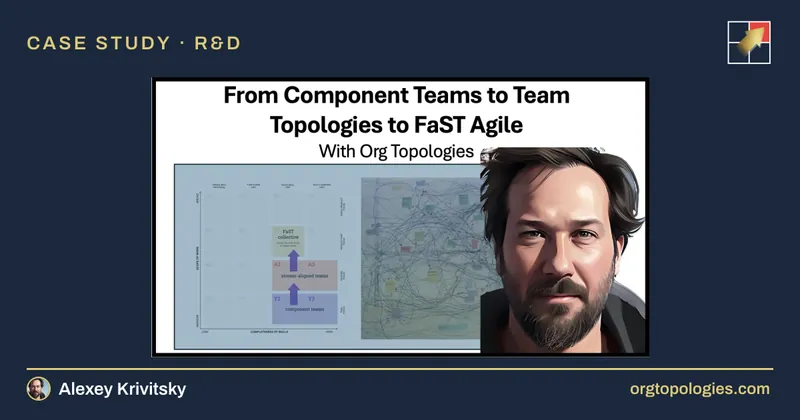
In our analysis of James Shore’s talk, a company moved from component teams to stream-aligned teams (Team Topologies) and later to a FAST ecosystem. James learned FAST from Quinton (Ron) Quartel and Paige Watson around 2019. Why it appealed to him, in his own words:
What we were doing in the Team Topologies approach is that we were scaling horizontally. We’re adding people by adding new teams… That requires careful design… Sort of a top-down approach… to be done in kind of a big bang way.
In the FAST approach we’re scaling vertically. We’re adding people by having more people participating in one virtual team (a Collective), having more people act as a single team.
James ran an experiment with seven tightly coupled stream-aligned teams, around 50 developers, and turned them into a FAST Collective: a single large team that regularly self-organizes into temporary small teams based on the work at hand.
We conclude that FAST helped design and sustain a high-level, product-centric ecosystem in that company. James also talked about the high transparency it created for business stakeholders, and in empirical process control, transparency is a prerequisite for inspection and adaptation. The third organizational design showed better manageability and higher adaptability than the other two, component teams and stream-aligned teams.
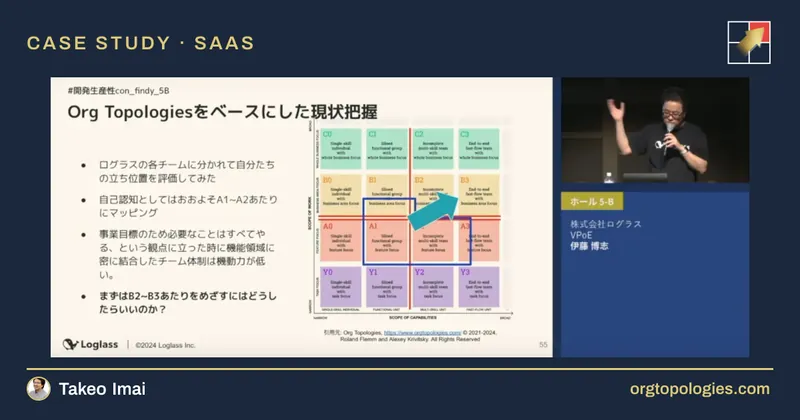
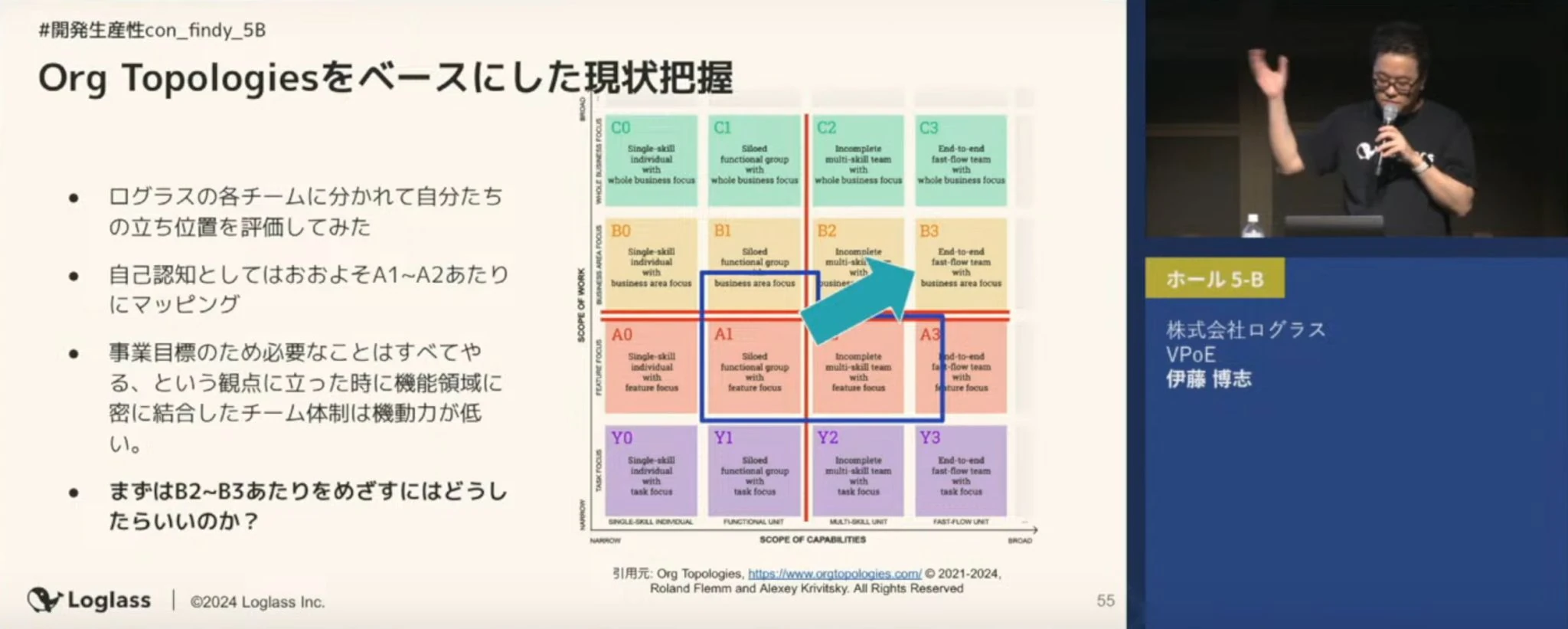
At Loglass, a Japanese SaaS company, independent Scrum teams each owned a functional area, highly capable on their own but with little collaboration between teams. In a one-hour workshop, all developers mapped their teams on the Org Topologies map. After months of discussion, they decided to “go up”: from teams working on features in isolation toward teams that share business areas, a team of teams. To scale their agility, they chose to try FAST Agile.
Read the full case study, see all FAST mappings, or map your own organization in the C-OTC class. The whole argument is in the book 10X ORG at 10xorg.com.
FAST Agile (Fluid Adaptive Scaling Technology) was originated by Quinton (Ron) Quartel. This page is our independent analysis; it is not endorsed by FAST Agile.
MAPPINGS
Case studies and articles that map it with Org Topologies.
FAQ
ACADEMY
Learn the Org Topologies approach
Practitioner (C-OTP) and Consultant (C-OTC) classes, live online and in person.