
ACADEMY
Org Topologies Academy
Practitioner (C-OTP) and Consultant (C-OTC) classes, live online and in person, with all upcoming dates.
- 300+
- practitioners and consultants trained in Org Topologies classes
- 65
- certified: C‑OTP, C‑OTC and C‑OTE
- Find a trained practitioner near you, or see who certified with whom.
- Meet them in the member directory →
CERTIFICATIONS AND DATES
Learn the Org Topologies approach
LIVE ONLINE · FOR LEADERS AND CHANGE AGENTS
C-OTP · Practitioner
Designing Adaptive Organizations for the Agentic Age. Live sessions for executives, managers, consultants and change agents who want to redesign their organization for performance — and then let AI accelerate it.
C-OTP dates →
2-DAY BOOTCAMP · IN PERSON
C-OTC · Consultant
Org Redesign for the Agentic Age. Bring a real case, map it with Org Topologies, and leave with a practical redesign direction and first steps to test it. Includes the path to C-OTC accreditation.
Explore C-OTC →
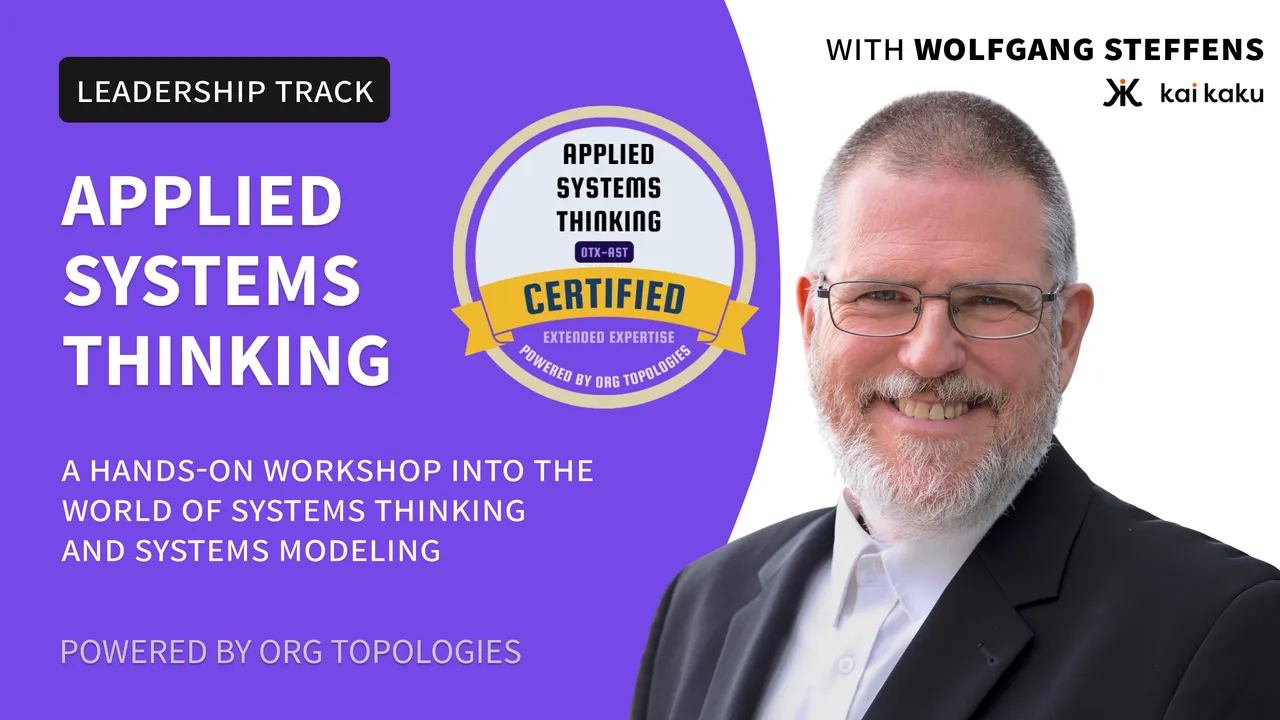
OTX-AST · 22 Oct 2026 · Live online
Applied Systems Thinking
A hands-on workshop into the world of Systems Thinking and Systems Modeling
Register →
Certification classes
14–15 Oct 2026C-OTCAmsterdamIn personBootcamp – Org Redesign for Agentic Age from €1,655 excl. VATRegister →: Bootcamp – Org Redesign for Agentic Age, Amsterdam
- Where
- Leonardo Royal Hotel AmsterdamPaul van Vlissingenstraat 24, 1096 BK Amsterdam, NetherlandsGoogle Maps ↗OpenStreetMap ↗
- When
- Wed 14 Oct, 09:00 – Thu 15 Oct, 17:00 CESTAdd to Google Calendar ↗iCal / Outlook ↓
Tickets
- Early Bird: save 200until 31 DecSale ended
- Single TicketThis is a single ticket to the 2-day C-OTC training. This ticket does not provide access to the OT Summit.1 left€1,655
- Duo TicketThis is a duo ticket to the 2-day C-OTC training. This ticket does not provide access to the OT Summit.1 left€2,590
- Triple TicketThis is a triple ticket to the 2-day C-OTC training. This ticket does not provide access to the OT Summit.1 left€3,890
Prices exclude 21% VAT, added at checkout where it applies.
10–24 Nov 2026C-OTPOnlineLiveDesigning Adaptive Organizations for the Agentic Agefrom €450 excl. VATRegister →: Designing Adaptive Organizations for the Agentic Age, Live online
- Where
- Online (Zoom): the link comes with your ticket
- When
- Tue 10 Nov, 11:00 – Tue 24 Nov, 15:00 CETAdd to Google Calendar ↗iCal / Outlook ↓
Tickets
- Early Birduntil 24 Oct5 left€450
- Standard Ticket€550
Prices exclude 21% VAT, added at checkout where it applies.
7–8 Dec 2026C-OTCHamburgIn personBootcamp – Org Redesign for Agentic Agefrom €1,495 excl. VATRegister →: Bootcamp – Org Redesign for Agentic Age, Hamburg
- Where
- Jensen & Komplizen GbRBahrenfelder Str. 52-54, 22765 Hamburg, GermanyGoogle Maps ↗OpenStreetMap ↗
- When
- Mon 7 Dec, 09:30 – Tue 8 Dec, 17:30 CETAdd to Google Calendar ↗iCal / Outlook ↓
Tickets
- Crazy Early Birduntil 3 OctSale ended
- Early Birduntil 14 Nov€1,495
- Regular: Single Ticket€1,695
- Group: Duo TicketThis is a two-person ticket to the training.€2,595
- Group: Triple TicketThis is a three-person ticket to the training.€3,895
Prices exclude 21% VAT, added at checkout where it applies.
17–18 Dec 2026C-OTCPragueIn personBootcamp – Org Redesign for Agentic Agefrom €990 excl. VATRegister →: Bootcamp – Org Redesign for Agentic Age, Prague
- Where
- Praga Office & GardenPernerova 702/39, Karlín, 186 00 Praha-Praha 8, CzechiaGoogle Maps ↗OpenStreetMap ↗
- When
- Thu 17 Dec, 09:00 – Fri 18 Dec, 17:00 CETAdd to Google Calendar ↗iCal / Outlook ↓
Tickets
- Crazy Early Birduntil 13 Oct5 left€990
- Early Birduntil 18 Dec5 left€1,090
- Regular: Single Ticket€1,290
- Group: Duo TicketThis is a two-person ticket to the training.€1,790
- Group: Triple TicketThis is a three-person ticket to the training.€2,490
Prices exclude 21% VAT, added at checkout where it applies.
11–12 Mar 2027C-OTCBrusselsIn personBootcamp – Org Redesign for Agentic Agefrom €1,295 excl. VATRegister →: Bootcamp – Org Redesign for Agentic Age, Brussels
- Where
- Horizon-1 BVBrussels, BelgiumGoogle Maps ↗OpenStreetMap ↗
- When
- Thu 11 Mar, 09:00 – Fri 12 Mar, 17:00 CETAdd to Google Calendar ↗iCal / Outlook ↓
Tickets
- Crazy Early Birduntil 30 Nov5 left€1,295
- Early Birduntil 31 Dec€1,495
- Regular: Single Ticket€1,695
- Group: Duo TicketThis is a two-person ticket to the training.€2,595
- Group: Triple TicketThis is a three-person ticket to the training.€3,895
Prices exclude 21% VAT, added at checkout where it applies.
Other classes and events
16 Oct 2026SummitAmsterdamIn personOrg Design Summit 2026€750 excl. VATRegister →: Org Design Summit 2026, Amsterdam
- Where
- Leonardo Royal Hotel | AmsterdamPaul van Vlissingenstraat 24, 1096 BK Amsterdam, NetherlandsGoogle Maps ↗OpenStreetMap ↗
- When
- Fri 16 Oct, 09:00–18:00 CESTAdd to Google Calendar ↗iCal / Outlook ↓
Tickets
- Early-Bird SaleSale ended
- Regular PriceSale ended
- Last Minute€750
Prices exclude 21% VAT, added at checkout where it applies.
22 Oct 2026OTX-ASTOnlineLiveApplied Systems Thinking €395 excl. VATRegister →: Applied Systems Thinking, Live online
- Where
- Online: the link comes with your ticket
- When
- Thu 22 Oct, 09:00–17:00 CESTAdd to Google Calendar ↗iCal / Outlook ↓
Tickets
- General Admission€395
Prices exclude 21% VAT, added at checkout where it applies.
TESTIMONIALS
What practitioners say about Org Topologies
It was so much easier to describe the FlixBus agile journey using Org Topologies™, which otherwise would need much more explanation and reasoning. Mapping product depth and team skills dimensions bridged the gap between applying frameworks and discovering ways to organize teams.
 Lucy KarpovaAgile and Product Coach at Flix and Sixt
I used Org Topologies for the last two years myself, to answer questions regarding the agility of a team and the current project, and to identify the next steps moving forward. It supported me as a basis for alignment with our clients in identifying where we stand right now and, if there is a wish to evolve, which would be the right direction and actions.
 Frank DohmenLead Project Management at IBM iX
We did this as a team exercise last week, gauging where on the map the teams thought they were. And then with Org Topologies, we were able to share our vision on where we want to go next. The great thing is that this helped us stay away from good/bad discussions and focus on something as simple as ‘we are here’ and ‘this is where we want to go next’.
 Michael VoorhaenProduct Manager at Strobbo, ProtimeRead the Strobbo case →
There are many tools out there that promise organizations the moon. Org Topologies™ IS the missing link that orchestrates the connection between the REAL issue at hand and RIGHT solution.
 Anya FaingershScrum Master and Agile Coach
This framework-agnostic visual approach offers food for thought for anyone, who wants to actively shape the next steps of their business transformation journey. Mapping your teams with archetypes simultaneously show where you are and fosters the discussion, where you want to go.
 Felix LagemannSenior Consultant
One of their main motivations was to publish a model that gave practitioners a clear and specific language when talking about organizational design.
 Carlton NettletonThe Scrum AcademyRead his analysis →
Community
TALK TO THE AUTHORS LIVE
Learn with community
Practitioners share maps, and the authors join the conversation live in Slack.
Join Slack