
Case study
Harnessing the Power of Org Topologies: A Journey in Designing Agile Organizations

Originally published on LinkedIn by Jürgen De Smet
Introduction: The Fusion of Theory and Practice
In the world of agile transformations and organizational design, the integration of innovative frameworks like Org Topologies™ with practical learning experiences marks a new era in organizational development. This article delves into a unique experiment with Org Topologies™.
I. The Org Topologies™ Experiment: A Community's Exploration
A Unique Community Event
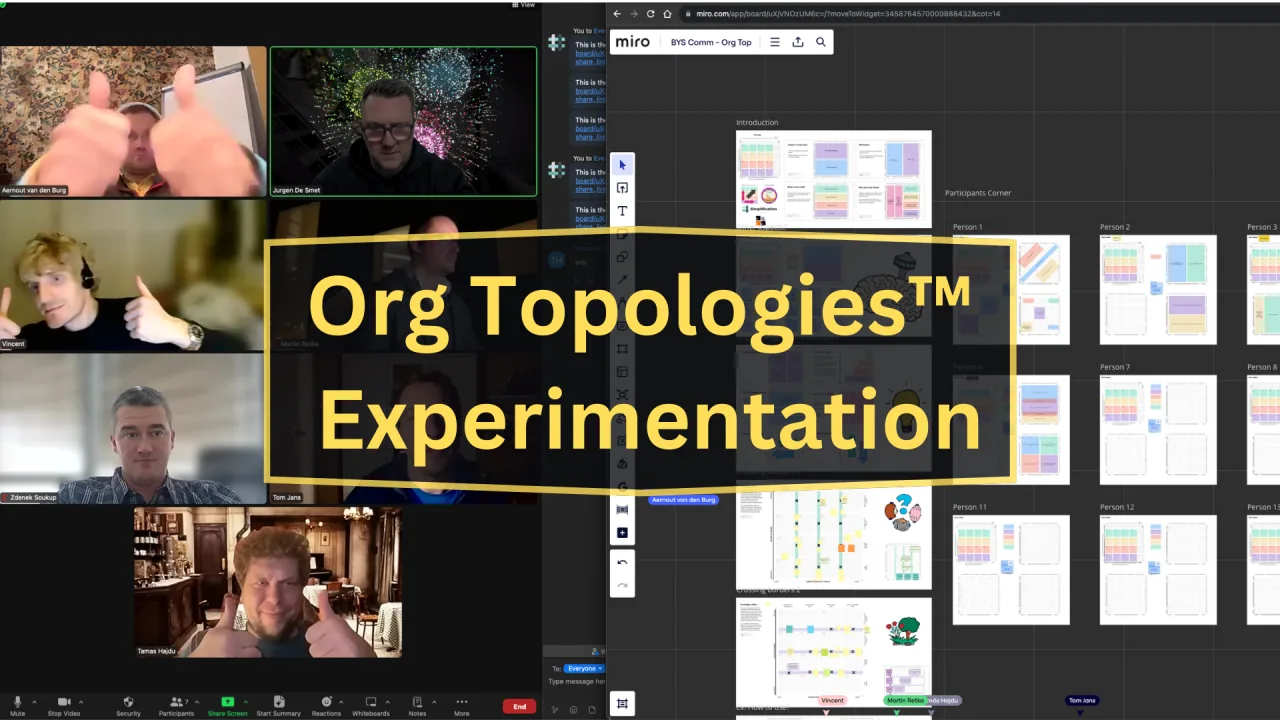
Last Thursday evening, a private community event brought together a group of forward-thinkers to explore the Org Topologies™ map. This session wasn't just another routine workshop; it was an enlightening journey through the intricate pathways of organizational design.
The Experiment's Design and Purpose
The session, crafted by yours truly (Jurgen De Smet), aimed to explore two critical questions:
- Can participants effectively utilize Org Topologies™ without prior in-depth explanation?
- What new applications of Org Topologies™ could emerge beyond the conventional understanding?
The approach was minimalistic, with little to no introduction to Org Topologies™, encouraging participants to dive into the map with fresh eyes and interpret it based on their instincts and assumptions. And this in a very short timeframe of 1,5 hours!
Reflections and Insights
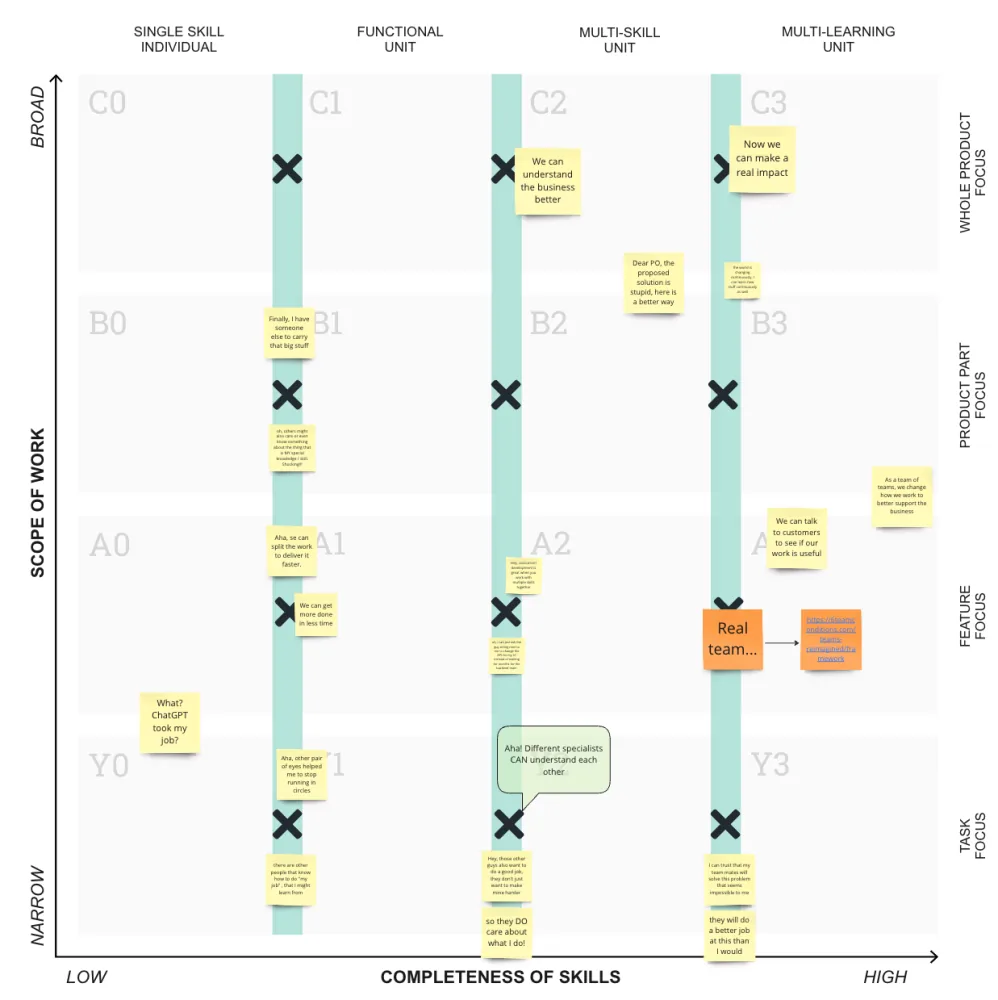
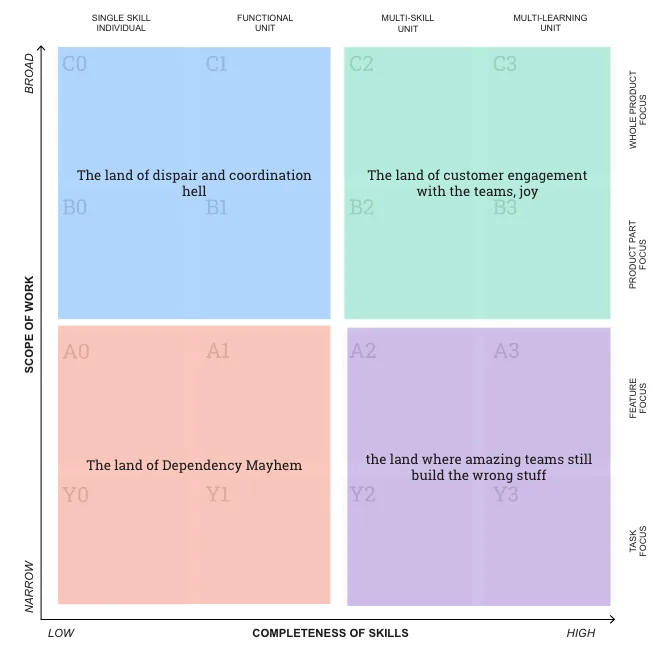
Participants engaged in a reflective exercise, exploring the map's various dimensions - vertical, horizontal, and even diagonal axes. This process validated the first objective: people can indeed navigate the Org Topologies™ map without extensive theoretical grounding. The deviations observed were not just minimal but offered new, potentially valuable perspectives.
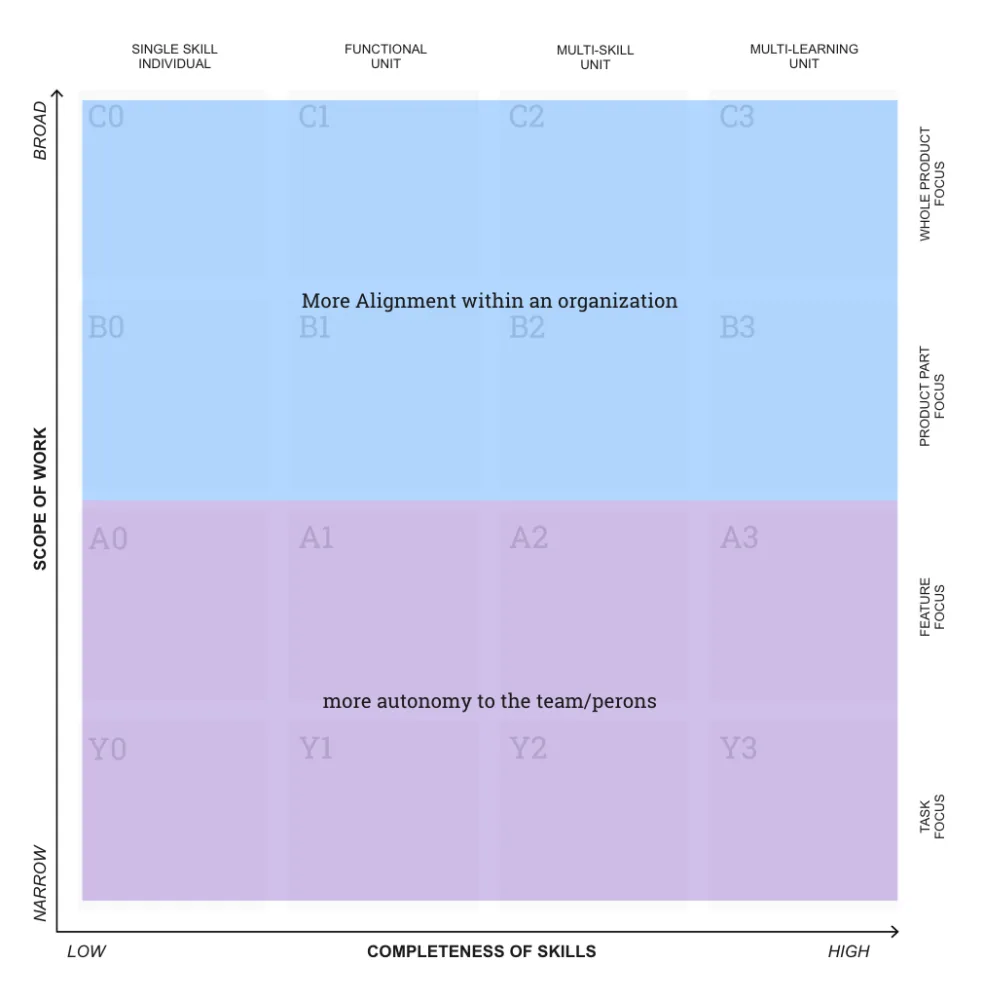
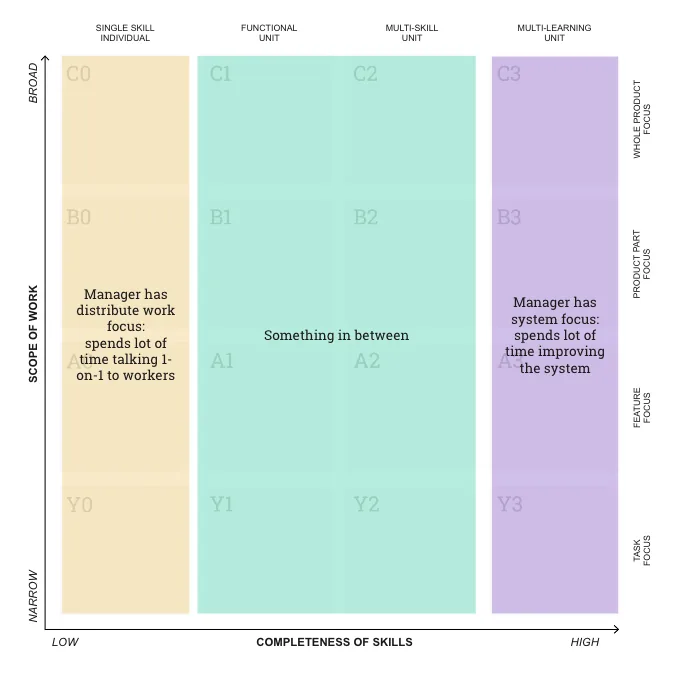
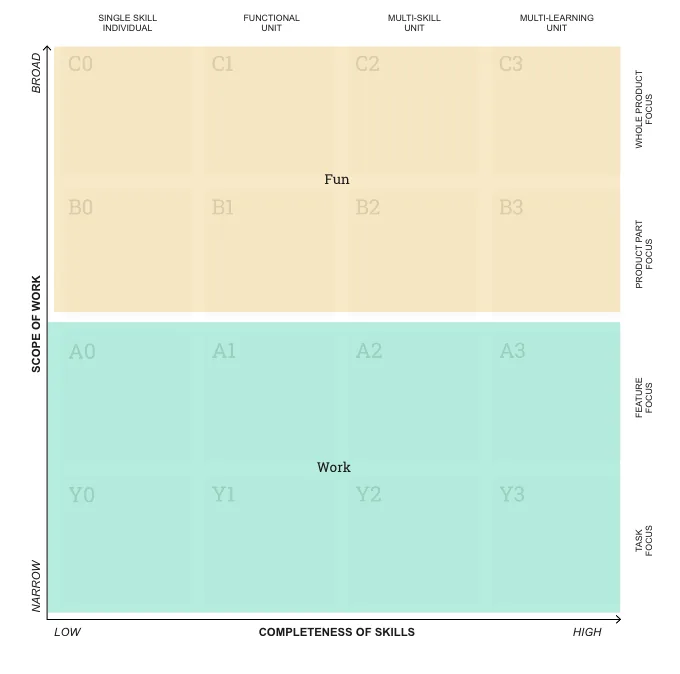
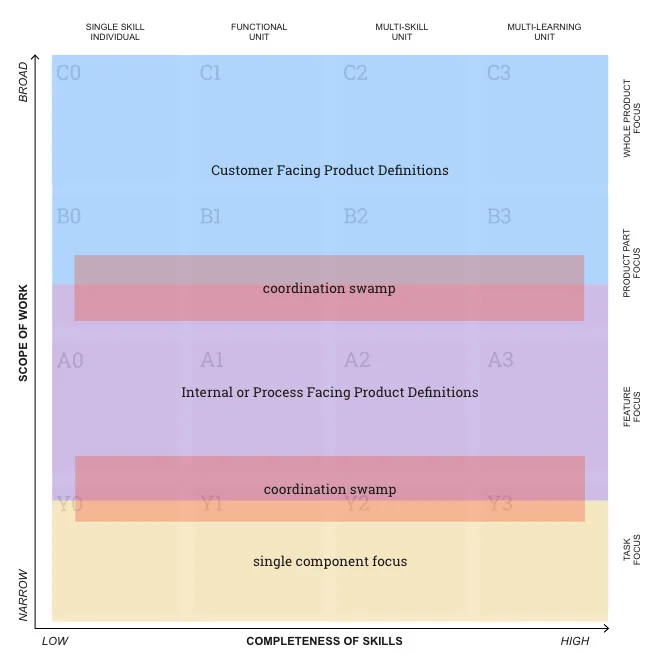
Some of the reflections built by attendees:
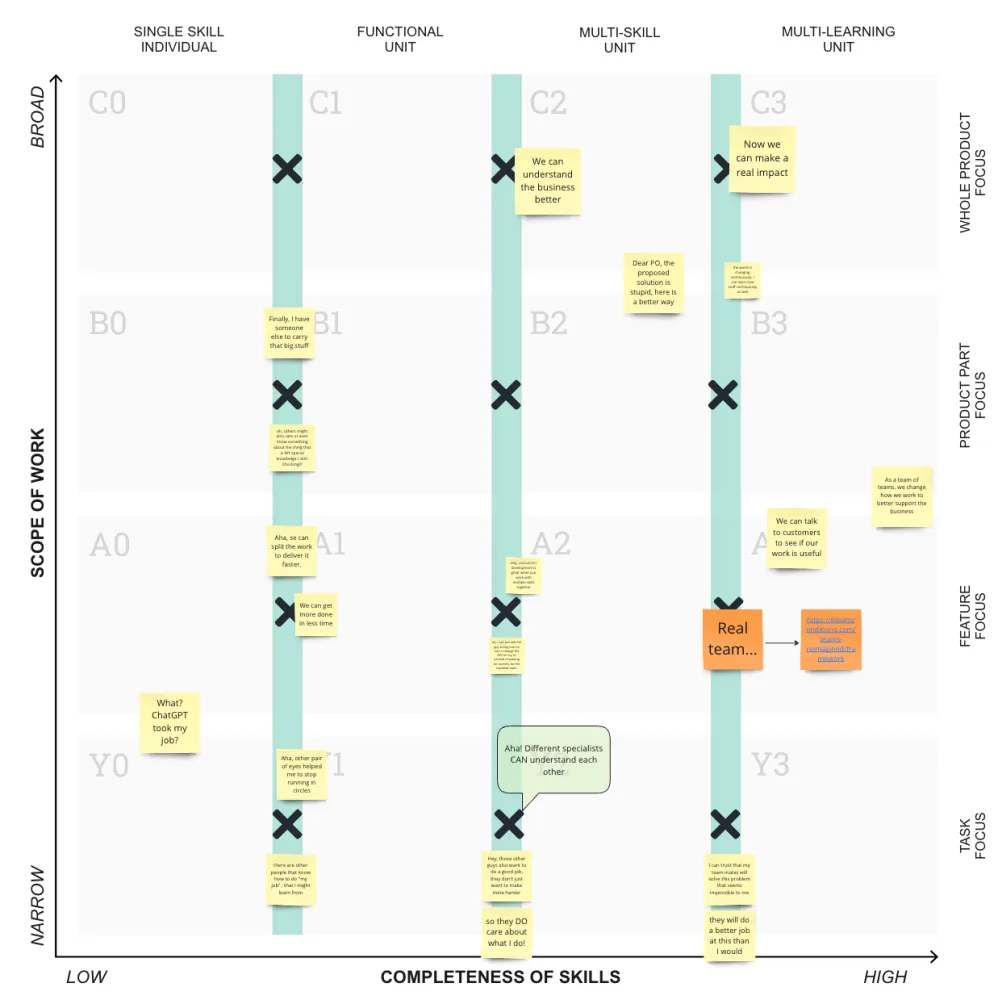
Hover over or tap any text on the drawing to read it.Tap any text on the drawing to read it.
Hover over or tap any text on the drawing to read it.Tap any text on the drawing to read it.
Hover over or tap any text on the drawing to read it.Tap any text on the drawing to read it.
II. The Agile Journey: From Understanding to Application
Exploring Coaching and Change
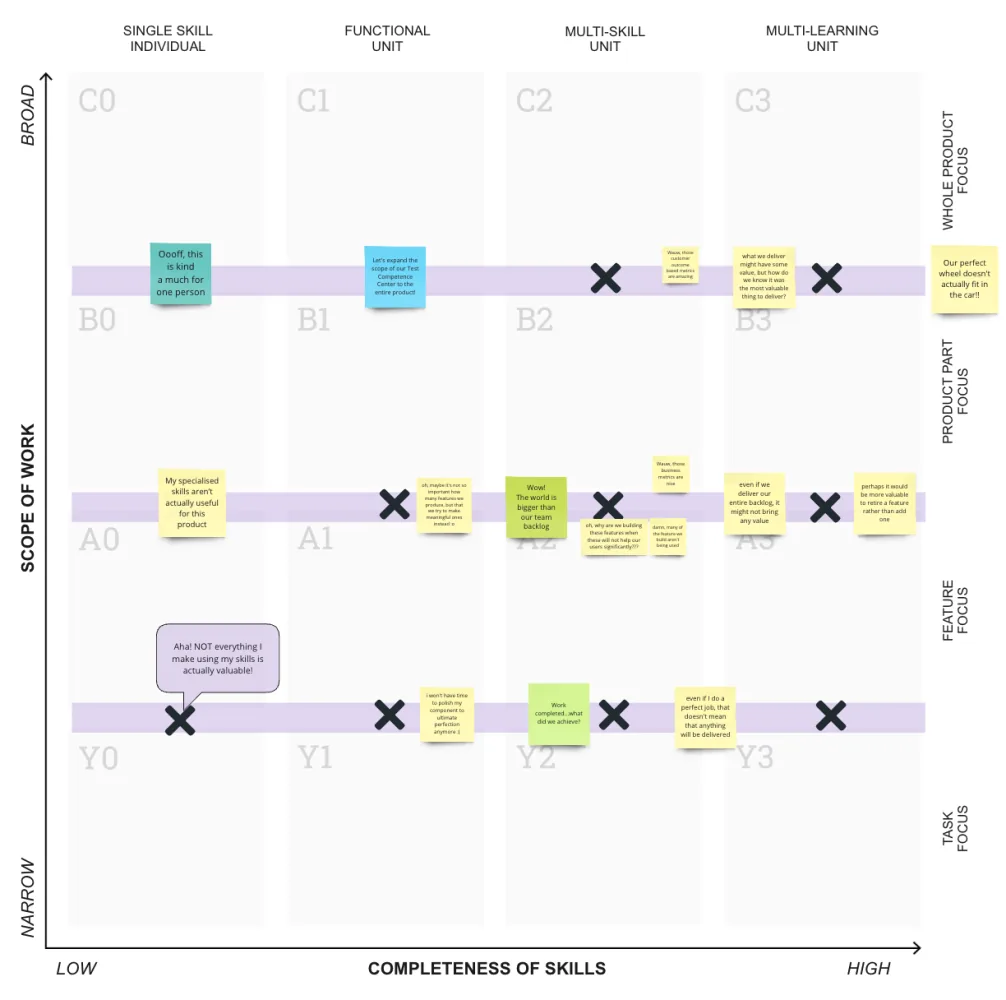
The second phase of the experiment shifted focus towards practical applications, such as coaching stances and change strategies to traverse the map. Having familiarized themselves with the map, participants brainstormed on these aspects collectively. What shifts does one need to make to go from left-to-right? What shifts does one need to make to go bottom-up?
Navigating the Org Topologies™ Map
An interesting revelation emerged here: contrary to the expectation that participants would find the left-to-right movement (transformational journey) more intuitive, they expressed greater ease with the bottom-to-top approach (upwards movement in organizational maturity). This finding challenges some traditional assumptions in agile adoption strategies generally focussed on the left-to-right approach, building loosely coupled cross-functional teams.
Hover over or tap any text on the drawing to read it.Tap any text on the drawing to read it.
Hover over or tap any text on the drawing to read it.Tap any text on the drawing to read it.
Beyond Conventional Applications
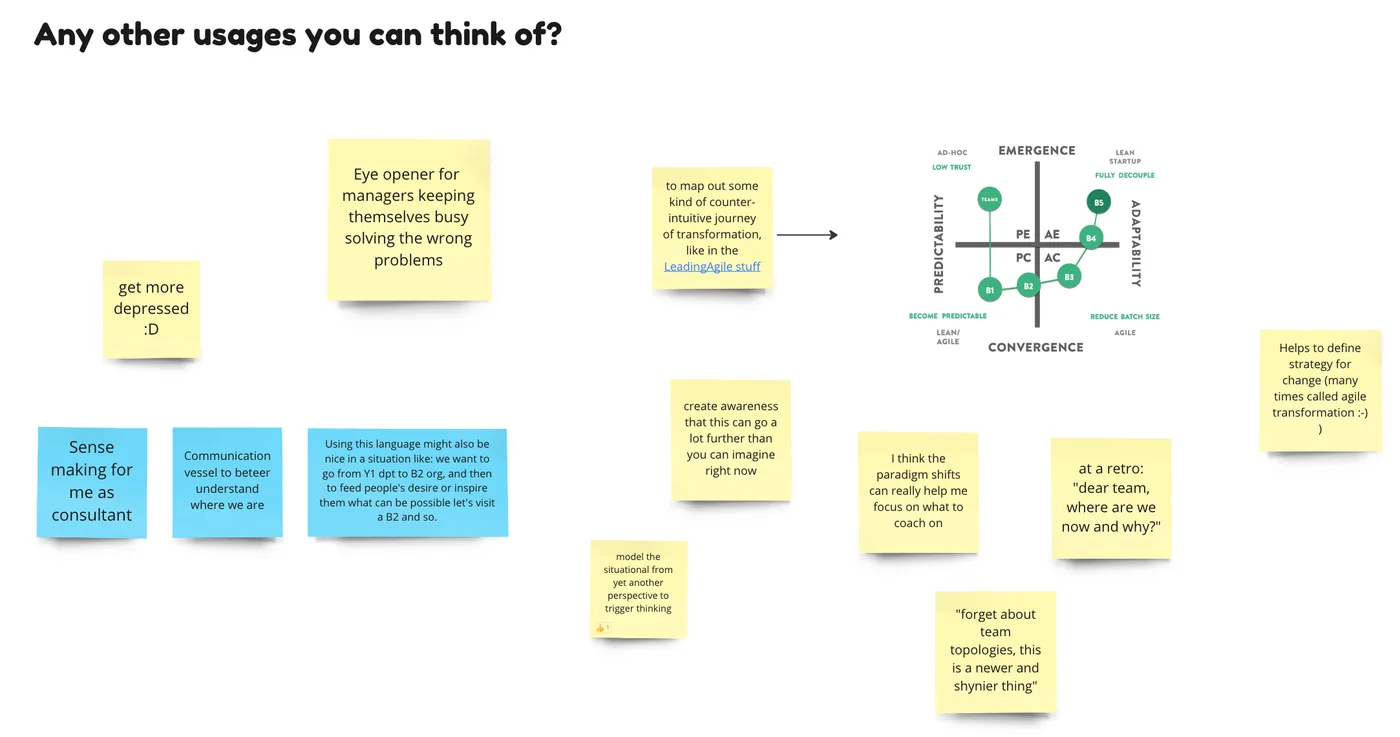
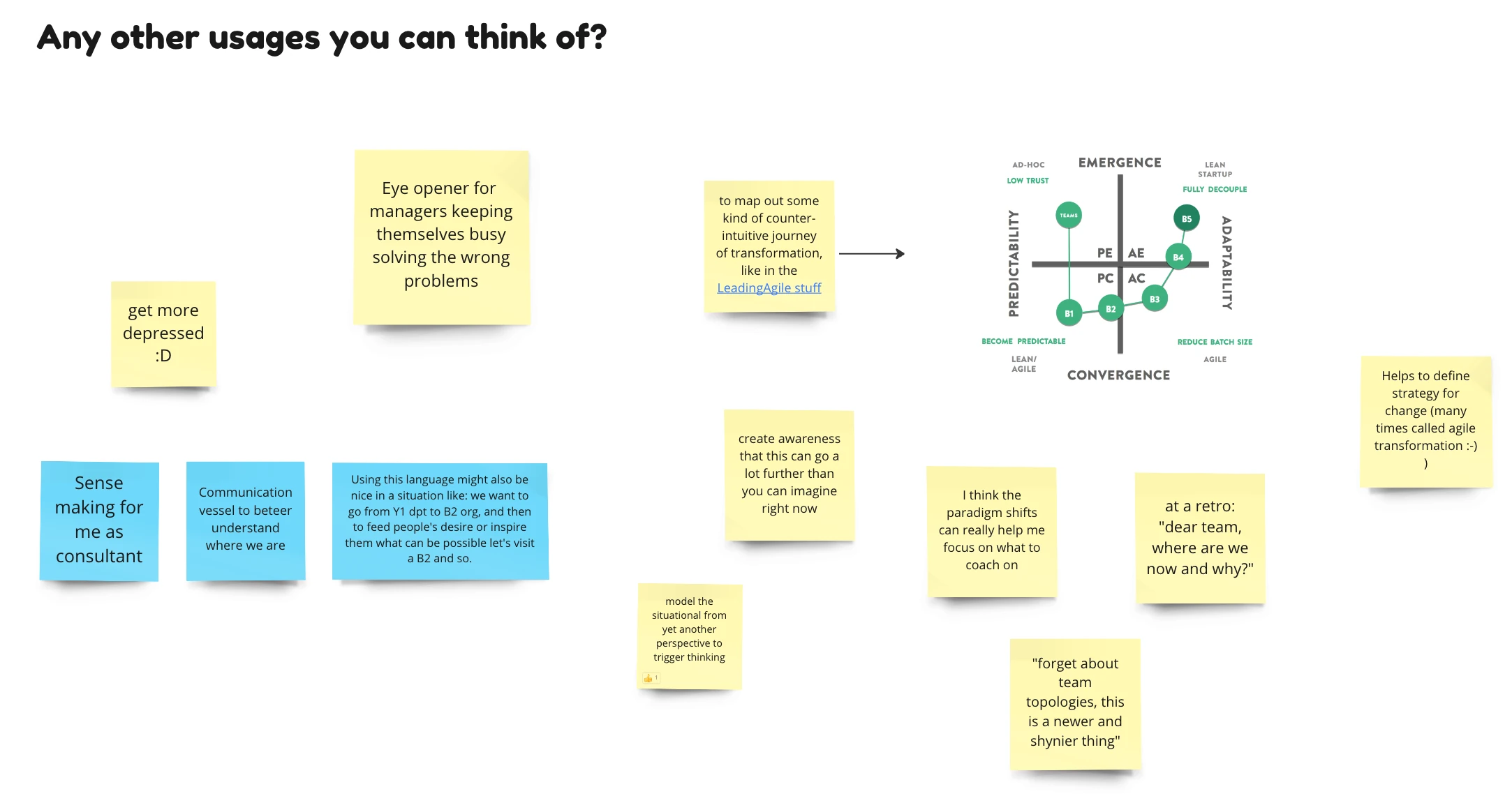
The discussion transcended traditional uses of the map, touching upon its role in management, team dynamics, and even personal growth and coaching. These insights illustrate the map's versatility in addressing various facets of an organization's journey towards agility and effectiveness.
Hover over or tap any text on the drawing to read it.Tap any text on the drawing to read it.
III. Org Topologies™ in Action: Practical Implications and Insights
Effortless Integration in Organizational Work
This experiment underscores a vital point: introducing and utilizing Org Topologies™ in an organizational context is surprisingly straightforward. It does not demand extensive groundwork or explanation, making it an ideal tool for practitioners who favour action over extended theoretical discussions.
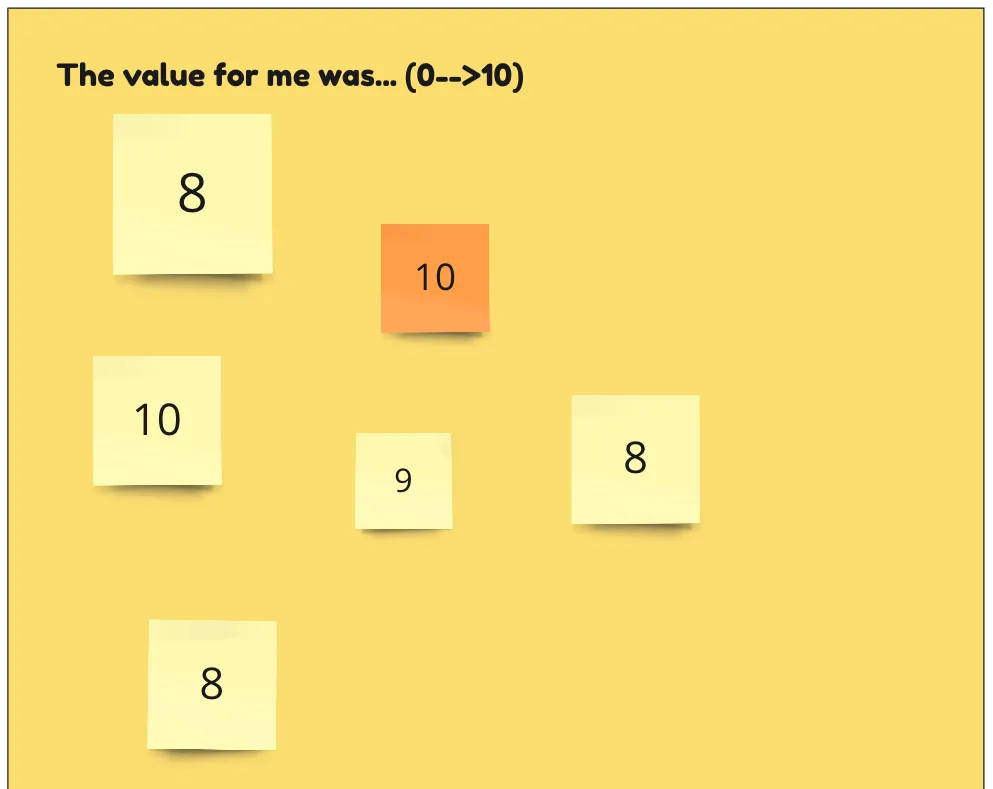
Value scoring of attendees using Org Topologies map without explanation:
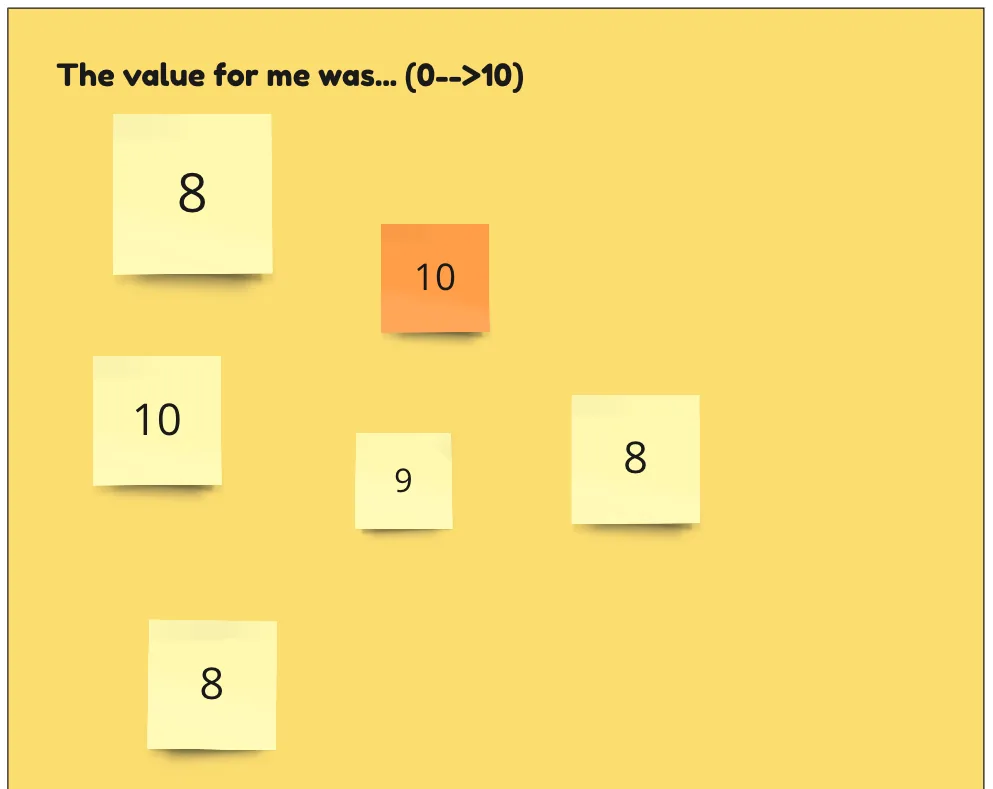
Hover over or tap any text on the drawing to read it.Tap any text on the drawing to read it.
Acknowledging the Contributors
A heartfelt appreciation goes out to the workshop participants - Zdenek Soukup , Aernout van den Burg , Tamás Hajdu , Martin Retka , Tom Jans , Vincent Hennebert - whose engagement and insights were instrumental in the success of this experiment.
Additionally I must acknowledge the work of Alexey Krivitsky and Roland Flemm to put the map together. Great job 👏
IV. Beyond the Workshop Experiment: Connecting Org Topologies™ with Designing Agile Organizations (DAO)
As a licensed Designing Agile Organizations trainer I can't help myself becoming the DJ mixing things up. Integrating Org Topologies™ with DAO principles and guides offers a comprehensive approach to crafting agile organizations. DAO provides the theoretical backbone and organizational design principles beyond the product development groups, Org Topologies™ offers a practical, hands-on map to navigate your path. Having a map combined with DAO principles, design guidelines and workshop suggestions will make the journey left-to-right, bottom-to-top a lot easier, practical and… allows you to plug-in your product development groups into the larger picture of an organization and its strategic focus.
The blend of DAO's structured learning and broad view on an organization with the dynamic, experimental nature of Org Topologies™ creates a powerful synergy. This combination equips leaders and practitioners with the knowledge and tools to effectively navigate the complexities of agile organizational design.
V. The Impact on Agile Adoption and Transformation
Redefining Agile Journeys
The insights from the Org Topologies™ experiment redefine how organizations approach agile transformations. It emphasizes a more intuitive, less prescriptive path, aligning with the agile principle of valuing individuals and interactions over processes and tools.
Strategic Movements in Organizational Design
The experiment's findings highlight the importance of considering both horizontal and vertical movements in organizational agility. This holistic view is crucial for a truly transformative agile journey. Generally known as a systemic approach to transformation, at the heart of both Org Topologies™ as well as DAO.
Implications for Leaders and Agile Coaches
For leaders and agile coaches, these insights provide a fresh perspective on guiding organizations through agile transformations. It underscores the need for adaptability, open-mindedness, and a willingness to explore beyond traditional frameworks.
VI. Personal Growth and Coaching: A New Dimension
The application of Org Topologies™ extends beyond organizational boundaries, offering valuable insights for personal growth and coaching. It serves as a reflective tool for individuals to assess their journey and growth paths within the agile landscape.
For coaches, Org Topologies™ becomes a versatile tool in their arsenal, aiding in the development of tailored coaching strategies that resonate with individual needs and organizational contexts.
VII. Final Thoughts and Future Directions
The experiment with Org Topologies™ and its integration with DAO (and LeSS) signifies a pivotal moment in the evolving landscape of agile organizational design. It highlights the continuous need for innovation, experimentation, and an open-minded approach to developing agile frameworks.
As we move forward, embracing these principles and tools will be key in navigating the ever-changing dynamics of organizational structures and cultures in the agile world.
The journey doesn't end here. Continuous learning, adaptation, and the willingness to experiment are essential for anyone involved in agile transformations and organizational design.
PS: I do mix an Org Topologies™ introduction into my versions of the Designing Agile Organizations and LeSS courses in a way that attendees grasp the potential of this powerful mix of principles, guides and experiments. Reach out if you want to attend one someday or you want to have an in-company event organized.



ACADEMY
Learn the Org Topologies approach
All upcoming events
 10–24 Nov 2026OnlineOnline Class – Leading the Agentic Shift: Rewire the R&D Organization
 €550 excl. VATLearn moreThese practical live sessions are for executives, managers, consultants and change agents who want to redesign their organization for performance — and then let AI accelerate it.
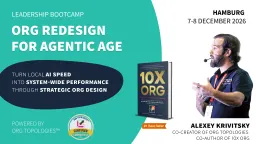 7–8 Dec 2026HamburgBootcamp – Org Redesign for Agentic Agefrom €1,495 excl. VATLearn moreA two-day, in-person bootcamp for consultants and leaders who redesign organizations. Bring a real case, map it with Org Topologies, and leave with a practical redesign direction and first steps to test it, so AI's speed turns into business results. Includes the path to C-OTC accreditation.
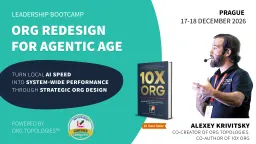 17–18 Dec 2026PragueBootcamp – Org Redesign for Agentic Agefrom €1,290 excl. VATLearn moreA two-day, in-person bootcamp for consultants and leaders who redesign organizations. Bring a real case, map it with Org Topologies, and leave with a practical redesign direction and first steps to test it, so AI's speed turns into business results. Includes the path to C-OTC accreditation.
Community
TALK TO THE AUTHORS LIVE
Learn with community
Practitioners share maps, and the authors join the conversation live in Slack.
Join Slack